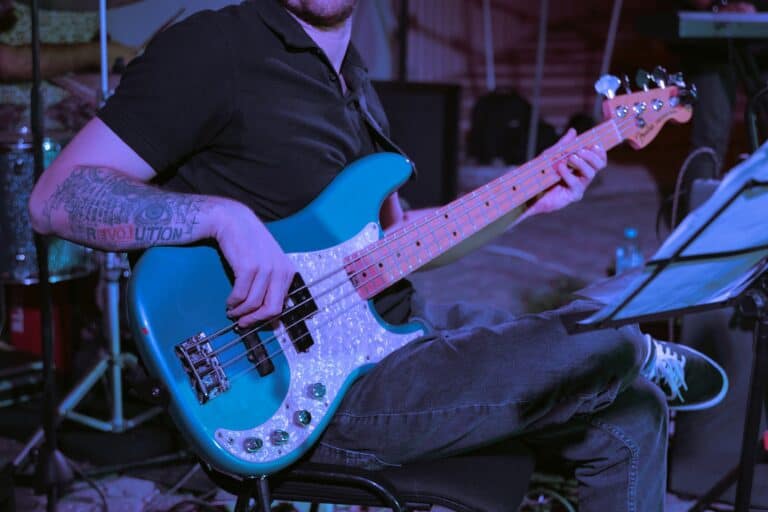
Joining a band is the most effective way to sharpen your musical skills, but success requires more than just talent. To join a band successfully, you must identify the right musical fit, master rehearsal etiquette, and possess reliable, portable gear.
Hopefully around these parts, this is not an embarrassing admission: In high school I was a “band nerd.” I was in marching band. I was in jazz band. I was in the pep band. I played for the school musical. I was in the show choir band. If it was band, I did it.
I think all high schools have their cliques (at least in the United States), and mine was solidly with the band kids. And I have no regrets about it. I made great friends and had great times.
Fast forward a few years (sigh…decades), and I found that I desperately missed the camaraderie that comes with playing music with others. My trumpet chops had long since faded, but my neophyte bass guitar skills were improving. So when I heard about a call for those looking to join a band, I jumped on it despite only having picked up the bass a few months earlier.
If you are tired of the intermediate slump and want to actually rock out, you need to find a group. In this guide, I am going to show you how to find the right fit, how to be a good band member, and what gear you actually need to survive the transition from your bedroom to a loud, sweaty rehearsal space. We are going to cover everything from band etiquette to the music rehearsal tips that will keep you from getting fired after the first session.
Disclosure: Some of the links in this post are ‘affiliate links’. This means if you click on the link and purchase the item, I will receive an affiliate commission.
The Benefits of Band Life
Playing by yourself is great for learning the notes, but joining a band is where you learn the music. When I finally stopped hiding in my room, my musical growth exploded. My timing improved more in three weeks than it had in three years because you cannot ignore a drummer. (No matter how much you might want to sometimes…) This forces you to develop active listening, where you stop just staring at your fretboard and start reacting to what the guitar player is doing or how the singer is phrasing a line. It is also the best way to practice improvisation and find your place in a specific genre.
Beyond the skills, there is the accountability. It is easy to skip practice when it is just you and your cat. It is much harder to skip when four other people are waiting for you to lock in the groove. Having a rehearsal schedule forces consistent practice in a way that an online course never will. Plus, you get a front row seat to the local music scene. I have met some of my best friends through random open mics and questionable ads. You are building a community, not just a setlist.
I already wrote about my beginner bass guide to music theory, but playing in a band puts that knowledge to the test. You may think you don’t know much theory, but when you ask the guitar player the key of the song and he says something like, “Um…it’s in a G shape, but I have a capo on the third fret” you’ll learn your theory quick.
Finding a Band to Join
Before you go googling “how to find a band to join,” you need to define your goals. Are you a hobbyist who wants to drink a few beers and play 90s covers on the weekend, or are you an aspiring professional trying to tour the country in a van that smells like old socks? There is no wrong answer, but if you join a group with different goals, everyone is going to be miserable.
I won’t claim to have vast experience with many different bands, but I’ve played in my share. I found them in a few different ways:
- Digital Platforms: For the best websites to find band members in 2026, check out BandMix, Vampr, and even Craigslist (just, you know…watch out for serial killers.) These allow you to filter by genre and skill level.
- Local Music Stores: Check the physical bulletin boards for flyers. People who still use paper and tacks are often surprisingly dedicated.
- Open Mic Nights: This may be the best organic way to find a group. It is terrifying, but it gives you the opportunity to “test run” what it would be like to play with different musicians before formally committing. Read my guide to your first jam session here.
Depending on the situation and level of commitment. There may be an audition. Only you can decide if that is what you’re after. However, if you do audition to join a band, remember that you are auditioning them just as much as they’re auditioning you. (Unless Metallica is looking another new bassist. In that case, they’re definitely auditioning you.)
There’s an old band saying. Play for the hang, the music, and the money. All three is best. Two out of three isn’t bad. If you’ve only got one of the three with your new band, it’s probably best to avoid. Playing with friends, but the music isn’t to your taste and there’s no money? Probably skip. You’re getting paid, but you don’t like the music or the people? Life’s too short.
Red Flags to Watch For:
- The band leader refers to the band as “my project” instead of “our band.”
- The drummer shows up without sticks or a drum key.
- They expect you to learn twenty songs by tomorrow night.
- They do not have a dedicated rehearsal space or play for now.
I once saw an add on BandMix for a group looking for a bass player. The type of music seemed like a good fit. As I read further into the description a few red flags popped up. Red flag 1: the new bass player has to provide the practice space. Hmm. Red flag 2: the practice space has to have a full drum kit. WTF?
Tips for Your First Band Audition and Etiquette
The fastest way to get kicked out of a band is not by playing a wrong note; it is by having a massive ego or being unprepared. One of the most important tips for your first band audition is that preparation is key. You must learn the songs before you arrive at the first rehearsal. Rehearsal is for practicing how to play together, not for learning the basic chord changes.
Good band etiquette also means knowing how to give and receive constructive feedback without your ego getting in the way. If the singer says your bass line is too busy and is clashing with the vocals, do not get defensive. They are trying to make the song better for the audience, not attack your soul.
Then there are the Three Ts of being a reliable band member:
- Time: Be on time. If rehearsal starts at seven, that means you are tuned up and ready to play at seven, not walking through the door at seven-fifteen.
- Tuned: Be tuned. Check your tuning between every song. Nobody cares how good your groove is if you are flat. (Also, don’t be constantly noodling when others are trying to tune or work a section.)
- Transportation: Have your transportation sorted. Do not be the person who always needs a ride from the guitar player.
Essential Gear for Gigging Musicians
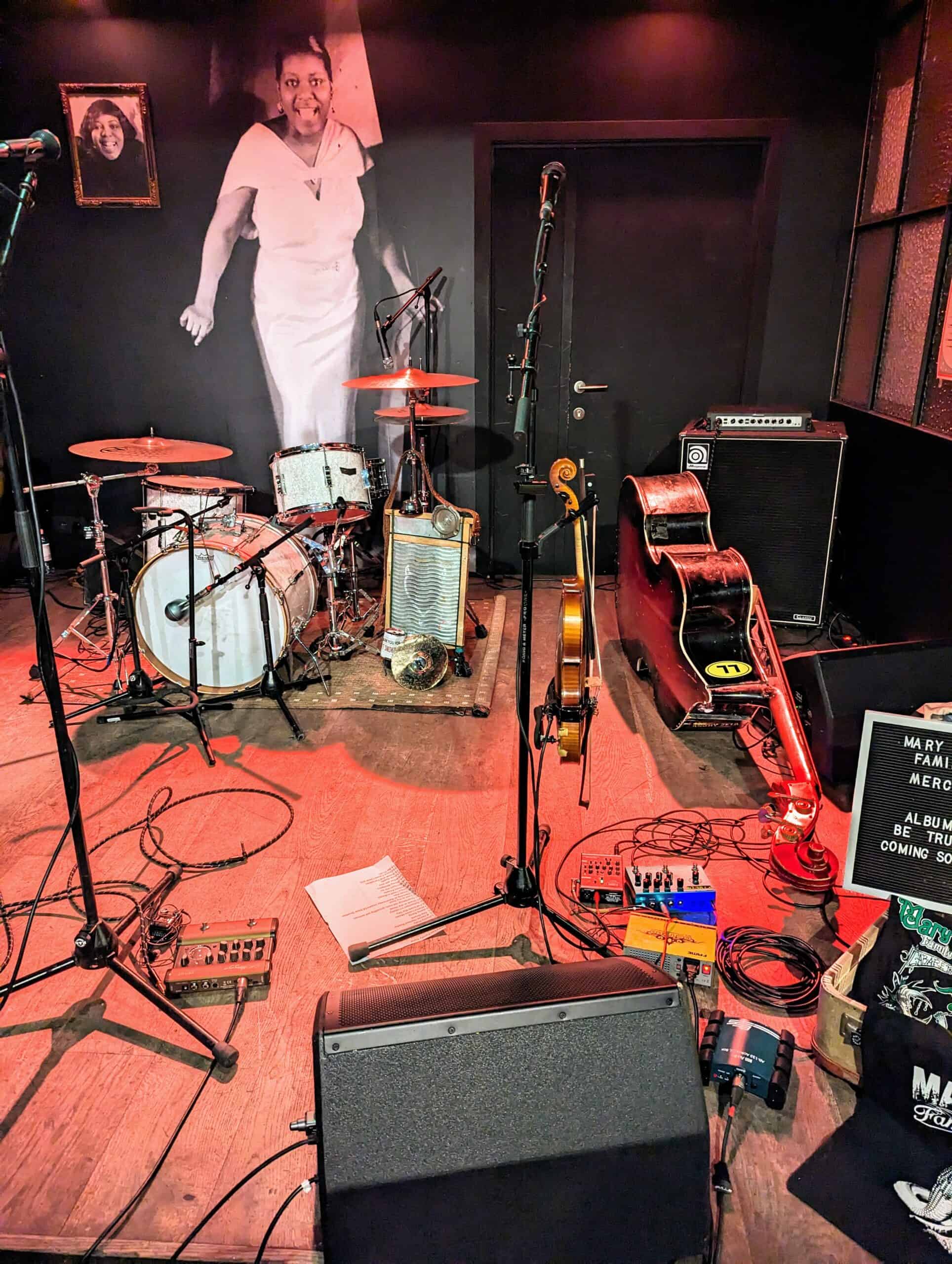
Moving from a bedroom to a band environment requires a shift in your band gear mindset. You are no longer just playing for yourself; you are part of a loud ecosystem that involves monitoring and often a messy PA system. You can read my bass gear starter pack article here, but if you’re joining a band, I recommend a few extra items.
Hearing Protection – This is a non-negotiable. I learned this the hard way after a four-hour session next to a crash cymbal that left my ears ringing for two days. You need the best earplugs for band rehearsal to protect your long-term hearing. High-fidelity earplugs are the way to go because they lower the volume without making everything sound muffled or underwater.
The “Backup” Kit – Things will break. It is a mathematical certainty. I always keep a small bag in my bass case that includes must have accessories for guitarists and bassists:
- Extra Strings: Because breaking a string during a set is a nightmare.
- Cables: Always bring a spare instrument cable and a spare power cable.
- 9V Batteries: If you have active pickups, an empty battery is a silent bass.
- Gaffer Tape: It fixes everything from vibrating amp hardware to loose cables on the floor.
Tuner – A pedal tuner is extremely helpful. Clip-on tuners can struggle in a loud room with a lot of vibrations from the drums. A pedal tuner lets you mute your signal and tune in silence, which is a major part of how to be a good band member. The StroboStomp HD is my go to tuner pedal and probably deserves a post all to itself. Make this the first pedal you buy and never be out of tune again.

Gig Bag and Pedal Board Case – Stop carrying your bass in those flimsy bags that offer no protection. Invest in gig bags with backpack straps or “pedalboard” hard cases to make moving your gear easier.
Instrument Stand – You’ll want to take breaks during rehearsal. In a crowded rehearsal space, you do not want to be trying to lean your $1000 bass up against the wall and hope for the best. Buy a simply folding instrument stand and make your life much easier. You may want a music stand as well. You can get these very cheap. I recommend this basic stand at Amazon.
First Band Rehearsal Checklist
To make sure you do not forget anything, here is a quick first band rehearsal checklist to go through before you leave the house:
- Your primary instrument.
- At least two instrument cables.
- Your pedalboard and all necessary power supplies.
- High-fidelity earplugs.
- A notebook and pen for marking changes to the setlist or arrangement.
- Water and a positive attitude.
Conclusion
Joining a band is the single best thing I ever did for my playing. It is intimidating to put yourself out there, especially if you feel like you are not a pro yet. But the truth is, you do not need to be the second coming of Bootsy Collins to hold down a groove in a garage band. You just need to be reliable, prepared, and willing to learn from your mistakes.
Take the leap. Stop being a bedroom legend and start being an above average bassist who actually plays with people. You will probably suck at first, and that is perfectly fine. We all did. The goal is to get to that level where you can walk into any rehearsal space and lock in with the group