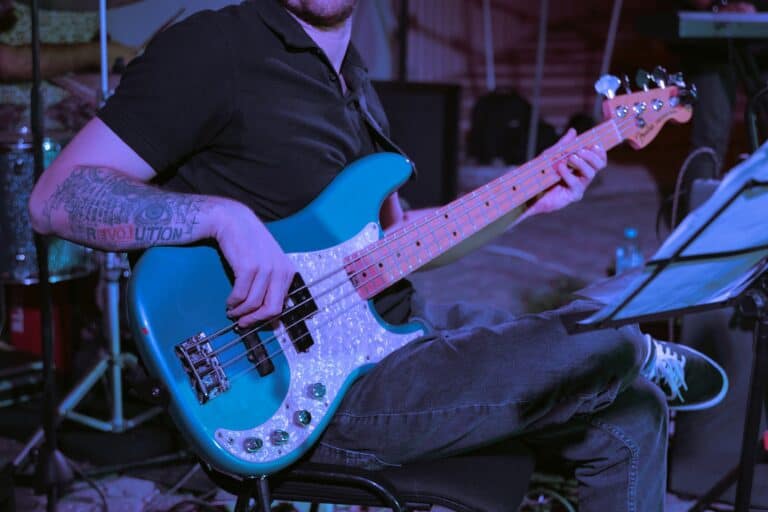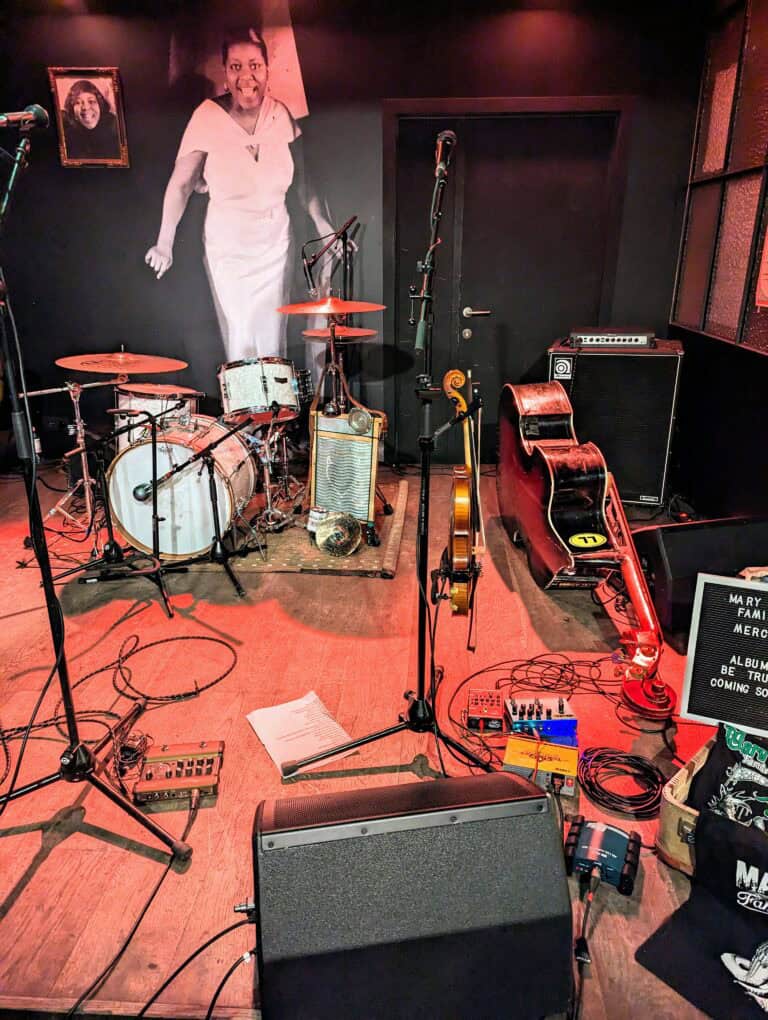

You can nail “Billie Jean” in the bedroom, your tone is dialed in, and you’ve practiced your Grammy acceptance speech. But the idea of walking into a room full of strangers, plugging into an unfamiliar amp, and trying to not only play with strangers, but in front of them? That’s enough to make any new bass player’s hands sweat. Trust me, you are not alone. That “chicken-out” reflex is real, and it’s the enemy of progress. Still, you’ve got to go to a jam session.
Short Disclosure: I’m not a pro bassist, I’m just a regular guy with a regular job who wants to get better and have some fun in my spare time. I’m going to tell you the real-world, no-BS minimum you need to know and bring so you can finally move that killer riff from your bedroom to the real world.
Full disclosure: I sometimes use affiliate links for the products I’m discussing. Using them helps fund this site while costing you nothing extra.
The Mindset Shift: Why You Need to Go
I remember my first jam session. I didn’t know what to expect. I didn’t know what to say or how to behave. I was sure everyone was staring just at me and questioning my very existence. So I get it. But you have to do it. Why? Because you learn more in five minutes of playing with a live drummer than you do in five hours with a metronome.
This isn’t just about showing off; it’s about leveling up your core bass skills:
- Real-Time Listening: You must listen to the drummer to lock in—a skill you absolutely cannot learn by practicing with a metronome. You become part of the rhythm section, not just a player. You learn to interpret “the look” from the lead guitar that means slow down or speed up or one more verse.
- Learning Form & Cues: Suddenly, you’re forced to learn standard song structures like the 12-bar blues or AABA, and you have to pick up on non-verbal cues (like when the song is about to end!) on the fly. No sheet music here!
- Fretboard Knowledge: When the song is one you know, but the singer says “let’s do it in G instead,” your fingers are forced to locate the root notes and chord tones quickly without relying on tabs. It’s the ultimate theory test. Expert level is playing with a guitarist who knows very little theory and when you ask the key, they tell you “I use a G shape, but with a capo on three.” As bass player, your job is to just figure it out.
- Networking: The best part? You meet other local musicians who are also looking for a bassist. This is how bands start!
The Absolute Minimum Gear (The “Above Average” Kit)
This isn’t the time to bring your entire pedalboard—seriously. The goal is to minimize setup time and potential points of failure. Keep it small, essential, and practical. Check out my guide to your Bass Guitar Gear Starter Pack for more details.
- Your Bass: This is obvious, but bring the one you’re most comfortable with. The one that feels like an extension of your body, not the shiny new one you haven’t quite bonded with yet. This also isn’t the time to show off that $5,000 boutique bass you bought. The audience won’t care and having a cheap beer spilled on your vintage Fender is a great way to ruin your night.
- Instrument Cable (Bring a Spare!): Cables fail. They just do. Always have a spare ready to swap out so you don’t waste ten minutes troubleshooting a $15 piece of wire while everyone stares.
- Tuner (Clip-On or Pedal): This is the most important thing. There’s no such thing as “a little out of tune!” You’re in tune or you’re not. Don’t be that guy. A reliable clip-on is fast and simple. I prefer a pedal tuner because it doubles as a mute, but I wouldn’t bring a pedal the first time until you’ve learned the set up.
- Earplugs (Highly Recommended): This is protecting your investment—your hearing! Trust me, drummers are loud. You can grab a pair of musician earplugs that keep the sound clear while turning down the volume. You may need to try a few that don’t overly block the low frequencies (because that’s you.) I’ve been using this brand at jam sessions.
- A Small Amp/DI: Some jams provide a backline (an amp), but always check! If they don’t, you need at least a small amp or a Direct Input (DI) Box to plug directly into the venue’s PA system. For most venues this is probably optional. Either it will be a small enough place there won’t be a sound system to plug into or, if not, the sound tech will take care of you. I always carry a DI box to be safe, but don’t stress over this. Check out this solid, reliable DI Box.
Why Blues Jams Are Your Easiest Entry Point
Here’s the secret to minimizing that anxiety: go to a Blues Jam.
Most blues relies almost entirely on the 12-Bar Blues Form. This is your safe haven. If you know the 1-4-5 chords in just one key, you can successfully play the bass line for 90% of the songs they call. The beauty of bass are fretboard patterns. If you can play the 1-4-5 pattern in one key, you can do every key.
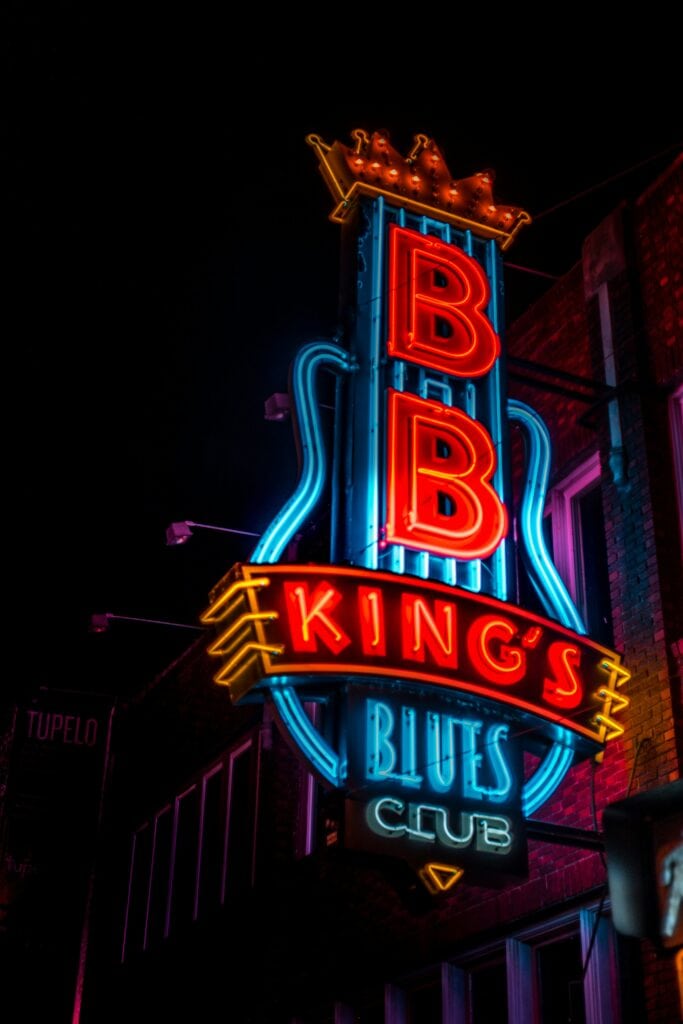
A quick story.
My first jam session ever was in a small club overseas where I barely spoke the local language. My plan was just to observe, but they needed a bassist. Because I knew the 12-bar form, I was able to play for hours. I spent the evening jamming with a legendary blues musician from that country (to my complete ignorance.) I ended up jamming all night with a guy who could sing “Hoochie Coochie Man” in perfect English but could barely have a conversation with me! The universal language of the 1-4-5 saved my butt—and I made a new friend. Everyone was incredibly welcoming and understanding.
- Preparation Tip: Find a local blues jam, and go once with no intention of playing. Just sit, watch the flow, and introduce yourself to the person running it (the jam leader). If you don’t play that night, you’ll know what to expect next time. Or, maybe the vibe will be great and you’ll jump right in.
- Action Tip: Before you go, make sure you have the 1-4-5 down and learn a few simple blues shuffle patterns. If it isn’t a blues jam, learn a simple song or two in case you get asked for something you want to play. For rock, something like “Zombie” is usually great. “Folsom Prison Blues” is another popular pick.
Don’t worry if you don’t already know the 12-Bar Blues. BassBuzz has a nice (free!) tutorial.
Jam Session Etiquette: How to Fit In (Not Freak Out)
Most mistakes aren’t musical; they’re social. Knowing the etiquette will make you feel ten times more comfortable.
- Keep It Simple (The Bassist’s Mantra): Your number one job is to lock in with the drummer and play the root notes. Do not show off. Don’t complicate things with fancy fills or upper-fret acrobatics. Selflessness is key to a good groove. Make others look good and you’ll quickly develop a reputation as a great bandmate. Playing the right note and the wrong time is much worse than playing the wrong note at the right time.
- Don’t Be a Fixture: Play 2 or 3 songs max, and then step aside. Other people are waiting, and you’ll look like a professional, courteous player by giving up your slot.
- Listen Actively: You won’t have sheet music, so you need to figure out the chord changes by ear. Don’t panic about major vs. minor right away; just hit the root notes when the chord changes. Listen to the guitar and keys.
- Talk to the Leader: Politely ask the person running the jam (usually the host musician) how you can get a slot and what the rules are. They are the gatekeeper, and being respectful goes a long way. Offer to help with set up or tear down if they need it.
- Don’t Overthink It: Nobody is judging your playing nearly as much as you are. Honestly, most of the crowd can’t pick out the bass notes (even if they’re feeling them.) If you do nothing more than play root notes in time, you’re golden.
Ready to Finally Groove?
Your biggest mistake isn’t playing a wrong note; it’s staying home. Get out there! The fastest way to eliminate the fear of a jam session is to truly know your instrument and the music theory that connects you to the band.
If you need a structured, no-fluff plan to master the 12-bar form and understand the fretboard in a way that actually helps you communicate with a drummer, check out my review of The “Big Three” Online Bass Courses. They all have resources that can help.
No more excuses. Get out there and be the rock star you see in the mirror!