
First Things First: Should You Even Buy Pedals For Your Bass Guitar Journey?
Welcome to the rabbit hole.
I have to admit when I first started learning bass, I only had a vague understanding of what these “pedals” even were that I kept hearing about. I sort of understood that they did something to the sound of your bass, but beyond that? I didn’t really know.
Honestly? That was probably a good thing. Since pedals weren’t really on my radar, I didn’t spend any time (or money) buying them. Even more importantly, the time I would have inevitably spent tweaking settings on my shiny new pedals was instead spent actually learning to play bass. (Something I accomplished thanks to a few great online courses like Pickup Music and BassBuzz.)
As amazing as pedals can be, they don’t do much for you if you haven’t first figured out the fundamentals of your instrument. So I’m writing this beginner’s guide to bass pedals in hopes of being helpful, but I do not recommend you go down this rabbit hole until you’ve spent a little bit of time focusing on the bass first.
All that said, there is a good reason these little boxes exist. Some are pure utility, making your life easier. Others are great for effects, and even if those effects are limited in use, they can provide a huge motivation boost to keep you playing more.
Full disclosure: I sometimes use affiliate links for the products I’m discussing. Using them helps fund this site while costing you nothing extra.
Bass Pedals — What the Heck Are They?
Let’s start with a quick bass pedal 101. In simple terms (which I promise is true because I’m far from an expert or a sound engineer): pedals are mechanical devices that are plugged in between your bass and your output source (typically an amp, but could also be to a PA system, computer, or other way of producing sound.)
These pedals produce some sort of effect or provide some sort of utility that affects your bass output. They’re often controlled by a button or pedal that can be turned on or off, traditionally with your foot. (Sometimes you’ll hear pedals referred to as stomp boxes for this reason.)
You Don’t Need Every Pedal — Start With the Ones That Are Most Useful For Bass
Guitar players will often go crazy with pedal effects. The same guitar can be made to sound a thousand different ways through pedals. The same is also true for bass, though typically bass players rely less on pedals. Don’t forget, ninety percent of the time, our job is to provide the foundation of the song. This usually doesn’t require twenty different effects to accomplish.
When you get to the stage of playing with other people, your job is to anchor the band. You need to sound consistent, clear, and massive. That’s where a few strategic pedals come in.
Ready to start shopping? Before you buy anything, make sure you’ve got the basics down with my Starter Gear Pack.
Pedal Basics: A Few Simple Rules
The world of bass pedals is surprisingly simple, yet fraught with peril. Peril, in this case, means bad tone and annoying noise.
First, your signal chain: This is the order your pedals go in. There is no “correct” way to order your pedals (despite what BassDude777 says on reddit.) A common approach is to put utility pedals first (tuners, compression), and fun, dramatic effects (like distortion) next, and tone-shaping pedals last. This allows the foundational pedals to clean up your sound before the effects mess with it. If you put a fuzzy distortion before a compressor, the compressor will try to clean up the fuzzy mess—not ideal. Boss, one of the most respected makers of pedals, has their own guide.
Second, the power rule: Do yourself a massive favor and buy a dedicated power supply that can power all your pedals. Daisy-chain cables might seem fine at first, but they can inject noise into your signal, turning your beautiful, rumbling bass into a mosquito whine. It’s no fun trying to figure out what is causing the buzz or how to fix it.
ABOVE AVERAGE PICK

1 SPOT Pro CS7 Guitar Pedal Power Supply
I recently picked up this power supply and it solved all my mysterious buzzing noise. It can power up to 7 pedals, more than sufficient for most players.
Finally, bass pedals vs. guitar pedals: A lot of the time, the answer is “it depends”. Guitar pedals are often designed to cut out the low frequencies…and that’s you. You don’t want that! Bass-specific pedals, on the other hand, are engineered to keep your crucial low end intact while applying the effect. When in doubt, stick to pedals clearly marked for bass to save yourself the disappointment of losing your low-end thunder. That said, there are far more guitar pedals than bass pedals. Feel free to experiment, but be careful before handing over a lot of money for a pedal that may not sound great on bass.
Your First Three Pedals
This list is not about getting every pedal in existence. It’s about the pedals that will take you from being a guy who plays bass to a guy who sounds professional. I fully admit the first three pedals I’m recommending aren’t the sexiest, but they are the most useful.
1. The Foundation: The Tuner Pedal
In my Bass Gear Starter Pack article, I suggested you buy a clip-on tuner. I stand by that. In fact, you should have a few of those because they get lost and stop working. However, I also suggested you might want a pedal for this. The pedal option is better and my recommendation for your first pedal. It’s especially useful when you join your first band.
The tuner pedal is the ultimate utility item. It should be the very first pedal in your chain because it requires a clean, unaffected signal to work its magic. A good tuner pedal will also function as a mute switch, which is essential for changing instruments or fixing a cable issue without broadcasting a loud, embarrassing thump over the PA system. It’s not sexy, but it’s mandatory.
ABOVE AVERAGE PICK
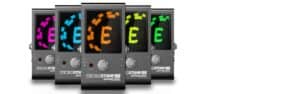
Peterson StroboStomp
Bass and guitar players can be oddly attached to their favorite tuner. This one is mine, but there are plenty of other good ones out there. The StroboStomp is super accurate, you can change the display color, and it has a setting specific for bass.
2. The Problem Fixer: The Compressor Pedal
If you regularly surf the various online bass communities, many will suggest one of the first pedals you should consider is a compression pedal. A compression pedal takes the signal from your bass and smooths it out. By using various adjustments, you essentially “compress” the signal so that it fits within a prescribed loud and quiet range. This is a helpful way to adjust for the normal human inability to hit every note exactly as you wish. It’s especially helpful in slap and playing with a pick where it is easy to play some notes much louder than you intend.
And…all of this is true. Except, I have to admit if I watch any video review of any compression pedal, it is almost impossible to hear the difference. I’ve heard many bass players say compression is less about how it makes your bass sound and more about how it makes you feel while playing. Nearly any professional bass player you hear is using compression. (Guitarists, too!) Even if they don’t have a compression pedal on their board, the sound engineer is using compression to adjust levels and make the band sound cohesive.
All this goes to say, it is worth getting a compression pedal early in your pedal journey and to start experimenting with it. Try different settings. Go crazy. See which ones sound good to you. You will notice a difference in your sound, but if you’re like me, it’ll be hard to describe exactly what that difference is.
It’s important to sound good while playing with others. Check out my guide to surviving your first jam session to learn more.
ABOVE AVERAGE PICK

MXR Bass Compressor
This is a rock solid compressor used by amateurs and pros alike. It has every setting you could want in a compressor and it’s on my own board. That said, there are cheaper (and more expensive) options so feel free to shop around.
3. The Tone Shaper: The EQ/DI Pedal
This is a two-in-one powerhouse and, honestly, one of the most critical pedals to have if you ever plan on playing outside your bedroom.
The EQ (Equalizer) section is what allows you precise shaping of your bass sound. You can boost the lows to sound warmer, cut the harsh mids to get rid of muddiness, or boost the highs to give your tone some needed clarity. Different rooms and different amps change your tone, and the EQ gives you the power to dial it back in to sound exactly how you want it.
The DI (Direct Input or sometimes Injection) functionality lets you plug directly into a venue’s mixing board or a recording interface without using an amplifier. This is mandatory for gigging or recording because it sends a clean, high-quality signal to the sound engineer. Even if you use an amp, the sound engineer often prefers to take your signal from the DI box.
You can buy pedals that only do EQ and you can buy pedals that are only DI. I recommend saving space on your board and buying a pedal that does both. As a bonus, most EQ pedals can also add a little grit or drive to your signal. More on that in my last recommendation.
ABOVE AVERAGE PICK

Tech 21 SansAmp Bass Driver DI V2
There are hundreds of pedals to choose from in this category, but SansAmp is a recognized leader in the field and used by professionals. There’s a good chance most produced music you listen to went through their equipment.
Bonus Recommendation: Overdrive/Distortion
Okay, enough with the serious utility pedals. Let’s talk about the fun stuff. If the previous suggestions are the equivalent of eating your bass vegetables, this one is for dessert. Plus, depending on the kind of music you enjoy playing, particularly rock or metal, you’re going to want some sort of drive to sound like your favorite players.
Overdrive is generally a lighter, warmer breakup that reacts to how hard you play. It’s great for adding a subtle growl to rock, funk, or blues lines. Distortion is heavier and more aggressive, often used for metal, grunge, and heavier rock. It’s the sound of aggression, pure and simple. You won’t use it on every song, but when you do, it will motivate you to play a little harder and a little louder. Finally, there is fuzz, the angriest of the lot, when you just need to get that aggression out.
These pedals are very much a matter of personal taste and it is one of the largest categories of pedals. You may even find a few different pedals you enjoy the sound of and each may find a place on your pedal board. My preferred distortion pedal these days is the AfterShock by Source Audio. It’s got the grit and noise I like. That said, it’s a $200 piece of equipment and maybe it isn’t what you like. Rather than going all in, I’m going to recommend something more affordable so you can dip your toes into the world of distortion.
ABOVE AVERAGE PICK

Joyo Double Thruster
Joyo makes really good pedals and amazing prices. I think the distortion on this one sounds great, but at the price, I wouldn’t feel bad if I decided to swap it out six months down the road.
It’s a Slippery Slope With Pedals…But Very Fun
If you start with these four pedals, you’ll have the essentials: The Tuner for staying in tune, the Compressor for consistency, the EQ/DI for tone and professional connectivity, and the Overdrive for fun. They key is to not let your GAS (i.e. Gear Acquisition Syndrome…a sometimes fatal condition) stop you from actually playing your bass.
So…are you ready to stop searching for the “perfect” gear and start playing?
- Check out my Pickup Music Review to see if it can help you reach that next level.
- Check out my Tomplay Review to get some practice in playing along with your favorite songs.
