

When Your Bass Starts Looking Like Furniture
We have all been there. You walk past your bass every day, and it is sitting in the corner on that stand you bought when you were feeling inspired. Lately, though, it has just become a very oddly shaped place to hang your laundry. I call this the “Couch Slump,” and let me tell you, it is a real thing.
Full disclosure: I sometimes use affiliate links for the products I’m discussing. Using them helps fund this site while costing you nothing extra.
A rut is not a failure on your part. It does not mean you are a bad musician or that you lack the natural talent people love to talk about. It is actually just a signal that your routine has become a loop. You are doing the same things, hearing the same sounds, and your brain has officially checked out. I have spent far too many hours and probably too much money buying online courses that did not click for me. We are going to break that loop today.
First things first, don’t feel guilty about taking a break. It happens. It’s natural. Nobody expects you to practice 10 hours a day. In fact, it’s better that you don’t. Focused, targeted practice is better than long hours of aimless noodling and jumping from video to video.
Here are a few tips you can use to break out of the bass slump and get back to loving your instrument.
Break the Muscle Memory Cycle
Tip 1: Stop Playing the Same 3 Scales
The biggest killer of motivation is the “Theory Fix” trap. The problem is simple: your fingers go to the same spots every single time you pick up the instrument. You plug in, you play that one major scale you have known for years, maybe you throw in a pentatonic box you saw on a TikTok video, and then you run out of ideas.
This is a muscle memory cycle. Your hands are on autopilot, but your ears are bored to tears. The solution is to finally understand the map. When you know why a note sounds good, you can actually find new ones instead of just guessing and hoping for the best. You do not need to become a jazz professor, but you do need to unlock the fretboard.
For many bass players, if your fretboard was a treasure map, everything beyond the 7th fret may as well be labeled “Here Be Dragons.” If you are tired of playing the same patterns, check out my Music Theory 101 for Bassists to unlock the whole fretboard.
Ditch the Static Metronome
Tip 2: Step Into the Band
Practice often feels academic and dry because you are playing in a vacuum. Some teachers will tell you to play with a metronome at a slow tempo, and gradually increase until you master the lick or go insane, whichever happens first. While timing is vital, playing along to a clicking box can be about as much fun as filling out tax forms. It makes the bass feel like a homework assignment.
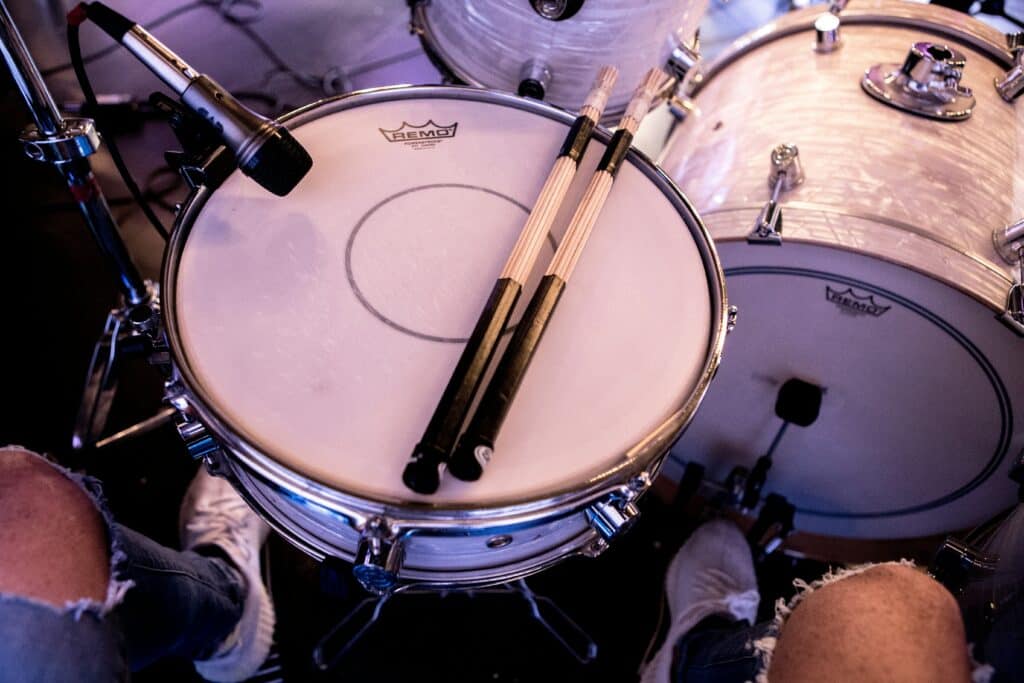
The solution is to use interactive tracks that make you feel like the featured bassist for a real band. This is about the joy of playing. This is a reason I’m a fan of Tomplay. It lets you jam with real songs, which is the fastest way to remember why you liked the bass in the first place. Plus, you can slow it down and gradually speed it up, same as a metronome.
I tend to start my practice sessions with guided drills and then end with Tomplay. There is something about hearing a full drum kit and a vocalist that makes you lock in differently than a beep-beep-beep ever could. See how it works in my Tomplay Review. It is the easiest way to turn a boring practice session into a stadium gig in your living room.
Stop Noodling and Start a Path
Tip 3: Get a “Personal Trainer”
We have all fallen into the YouTube rabbit hole. You sit down to practice, you ask yourself what you should practice today, and then you spend 20 minutes scrolling through “Top 10 Slap Riffs” videos while your amp stays cold. By the time you find a video that looks interesting, you have zero minutes left of actual playing time.
You need a structured, high-energy curriculum. Think of it like getting a personal trainer for the gym. You do not show up and stare at the weights; you follow the plan. Pickup Music’s Learning Paths take the guesswork out of the equation. They are designed for the player who wants to see measurable progress in modern styles.
I am a regular guy with a regular job, and I do not have time to curate my own music education. I need someone to tell me exactly what to do next. If you need a professional to tell you exactly what to do next, read my Pickup Music review to see how their paths cured my boredom. It is much harder to be in a rut when you have a clear “Level Up” button waiting for you every day.
Spark Creativity with New Tones
Tip 4: Buy a “New” Sound
Sometimes, the rut is not in your head; it is in your ears. If you have been playing through the same clean, flat amp setting for six months, your ears have become desensitized to your own playing. Sometimes a fresh sound—like a bit of growl from an overdrive pedal—makes a boring riff feel brand new.
You do not need to spend thousands of dollars to fix this. You do not need a five hundred dollar pedalboard. Just one new texture can spark an entire week of creativity. I remember buying my first cheap fuzz pedal. I played the exact same three riffs I always play, but they sounded like a thunderstorm. Suddenly, I was excited to plug in again.
Check out my Beginner’s Guide to Bass Pedals for the four essentials that actually change your vibe. It is a “new” sound that can often lead to a new way of thinking about the instrument.
Become a Well-Rounded Musician
Tip 5: Venture into the Dark Side
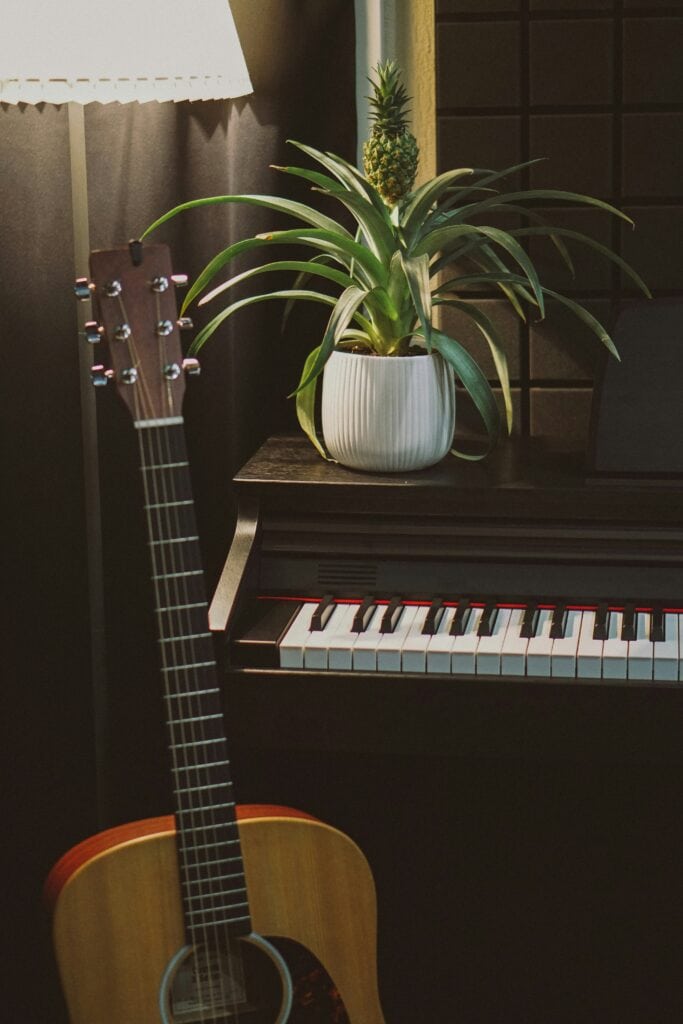
I have a confession to make. I recently purchased an electric guitar. Also a keyboard. I made sure to explain to my bass that I still love it and it will always be my number one, but sometimes you need to explore.
This might sound counter-intuitive. Why would you play a different instrument when you are trying to get better at bass? Consistent practice is important, but if you are feeling a little burned out, trying something different for a few sessions can clear the mental fog.
Guitar and keys help me be a better bass player by reinforcing similar music theory ideas in a different way. When you see how a chord is built on a piano, it suddenly makes more sense when you go back to your fretboard. It keeps your brain engaged with music without the specific pressure of mastering the bass that day.
Being an above average bassist means understanding how the whole band works. A little musical flirting with a guitar might be exactly what you need to appreciate your four strings again.
Prepare for a Real Jam Session
Tip 6: Make Music With Other People
The bass is a social instrument. It was never meant to be played alone in a bedroom forever. One of the fastest ways to kill a rut is to put some skin in the game. Having a date on the calendar to play with a human drummer changes how you practice.
Suddenly, those scales are not just exercises; they are tools you need so you do not look silly in front of other people. The terror of open mics is real, but it is also a massive motivator. I still go up to random strangers at open mics and ask if they need a bass player, even when I feel totally unqualified.
If you are ready to take it to the stage, see my Beginner’s Guide to Jam Sessions for how to prepare. Nothing cures a practice rut faster than the realization that you have a rehearsal in three days and you do not know the chorus to the song. Joining jam sessions is the best way to find your first band.
Conclusion: The One-Percent Rule
You do not need to overhaul your entire life to get out of a slump. You do not need to practice for hours a day or sell your soul to the metronome. Just pick one secret from this list and spend 15 minutes on it.
The goal is to stop the rut right now. Do not wait for perfect motivation to strike, because it usually does not work that way. Just pick up the bass and do one thing differently today. If you are ready to stop the rut right now, start a structured path. Check out my review of the Best Online Bass Lessons for 2025 to find the one that actually makes you want to play.
Let’s stop searching and start playing.