
Moving is one of the fastest ways to lose momentum on your instrument. Gear gets boxed up, your practice space disappears for a few weeks, and by the time you’re unpacked, sitting down with the bass again feels less like a habit and more like a decision you have to talk yourself into.
That’s where I’ve been for the past couple of months. And the thing that’s actually gotten me back into a regular practice routine — with zero mental overhead about what to work on — is Pickup Music.
Full disclosure: I sometimes use affiliate links for the products I’m discussing. Using them helps fund this site while costing you nothing extra.
Why Structure Matters More Than Motivation Right Now
After a break, the hardest part isn’t playing — it’s deciding what to play. Scales? Transcriptions? That one tune you never finished learning? When you’re rebuilding a habit, decision fatigue kills momentum faster than lack of skill does.
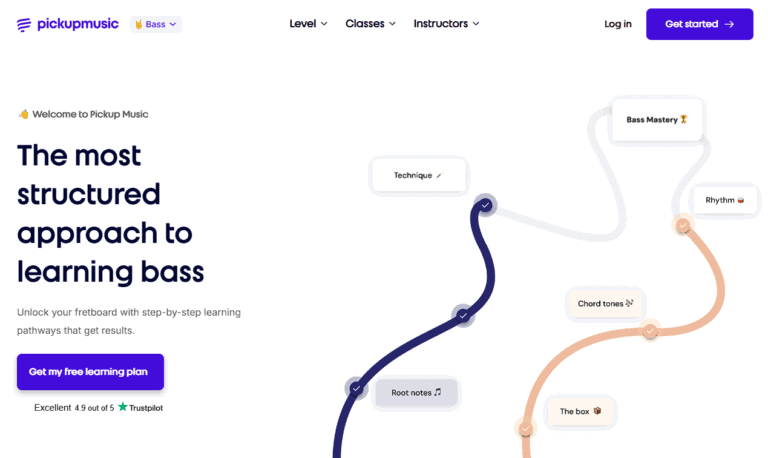
Pickup Music solves that problem by design. I open the app, hit the next lesson in my path, and go. No planning, no browsing YouTube for the fortieth “bass practice routine” video, no wondering if I’m working on the right thing. The structure does the thinking so I can just play.
Why I Keep Recommending It to Readers
I’ve noticed from this blog’s traffic that a lot of you are already searching for and reading about Pickup Music, so I’m not breaking new ground here — but I get asked often enough about which online bass learning platform is worth the money that it’s worth saying plainly: it’s the one I actually use, consistently, months and years in.
I’ve tried other structured lesson platforms and self-directed practice plans over the years. Some are stronger on theory, others on repertoire, others on technique drilling. Every platform has trade-offs. For me — especially in a stretch where I need to rebuild consistency without overthinking it — Pickup Music has been the best fit.
If you’ve been on the fence about Pickup Music, this is as good a time as any to jump in — if you’re in a similar spot to me, gear’s out of the case again but the routine hasn’t quite clicked back in, a structured path removes the one obstacle that actually matters: deciding what to do today.
The Other Half: Playing Along with Real Songs
Structured lessons get my technique and reading back in shape, but they’re not the whole picture. Once I’ve got something under my fingers, I want to actually play it in context — which is where TomPlay comes in. It’s sheet music and backing tracks for real songs, so I can take what I’ve worked on and use it against an actual mix instead of a metronome.
Pickup Music handles the “what should I be practicing” problem. Tomplay handles the “now let me actually play music” problem. Between the two, I’ve got a full loop: structured skill-building, then real repertoire to apply it to.
Tomplay also happens to have a flash sale running July 16–23 if you want to check it out.
👉 Check out Tomplay’s flash sale here
The Takeaway
You don’t need a perfect plan to get back into bass after time off. You need a plan, followed consistently, that doesn’t require willpower to figure out each day. Pickup Music gets me there for technique and structure; Tomplay gets me there for actually playing songs. That combination is what’s stuck for me longer than almost anything else I’ve tried.