You’ve got the basics down…what’s next in your bass guitar journey?
As I mentioned in my “Big 3” review, I recommend BassBuzz’s Beginner to Badass course for the true beginner. I think Josh and his team do a great job at getting the new bass player well on their way to the intermediate level. If you’re like me though, you may end that course and wonder what’s next?
You turn to YouTube. Suddenly, I had a library of 10,000 lessons with no sequence, no context, and no guidance. I was an above-average bassist with an intermediate skill set and zero idea what to do next. I was paralyzed by choice. One day a video on slap bass. The next on the importance of mastering Locrian mode. Screw it, let’s just learn “Hysteria.” That, my friends, is no way to progress.
If you’re nodding along right now, I have great news: I found the map out of the wilderness.
Right now, Pickup Music is my go-to program. This isn’t just a sales pitch. I use it almost every single day. It’s the perfect bridge between a structured beginner course and becoming a truly fluent musician. It’s the only one I’ve found that specifically addresses the question: “Okay, I don’t suck anymore, but how do I get good?” It’s for these reasons I recommend Pickup Music after Beginner to Badass. Read on to find out why.
Affiliate Disclosure Alert: Just so we’re clear, I am an affiliate for Pickup Music. But remember my promise? I only review what I’ve paid for, tested, and genuinely believe in. If it was trash, you wouldn’t be reading this.
Tomplay at a Glance
| Feature | Focus | Best For |
| Primary Use | Playing interactive sheet music | Timing, sight-reading, and motivation |
| Best For | Learners who struggle with motivation | Applying theoretical knowledge to real songs |
| Pricing Model | Monthly or annual subscription | Regular, motivated users |
| Core Customization | Speed, Looping, Track Mute | Above Average tackling difficult passages |
The Perfect Bridge: Why Pickup Works After Beginner to Badass
Structured Progression vs. Freestyle: The Intermediate Growth Formula
BassBuzz is brilliant because it’s a direct, linear path from A to Z. You finish, you know the basics. But intermediate growth doesn’t work that way. Once you have the fundamentals, you need modular, project-based learning. You need to choose a skill—say, walking bass—and hyper-focus on it until it’s nailed.
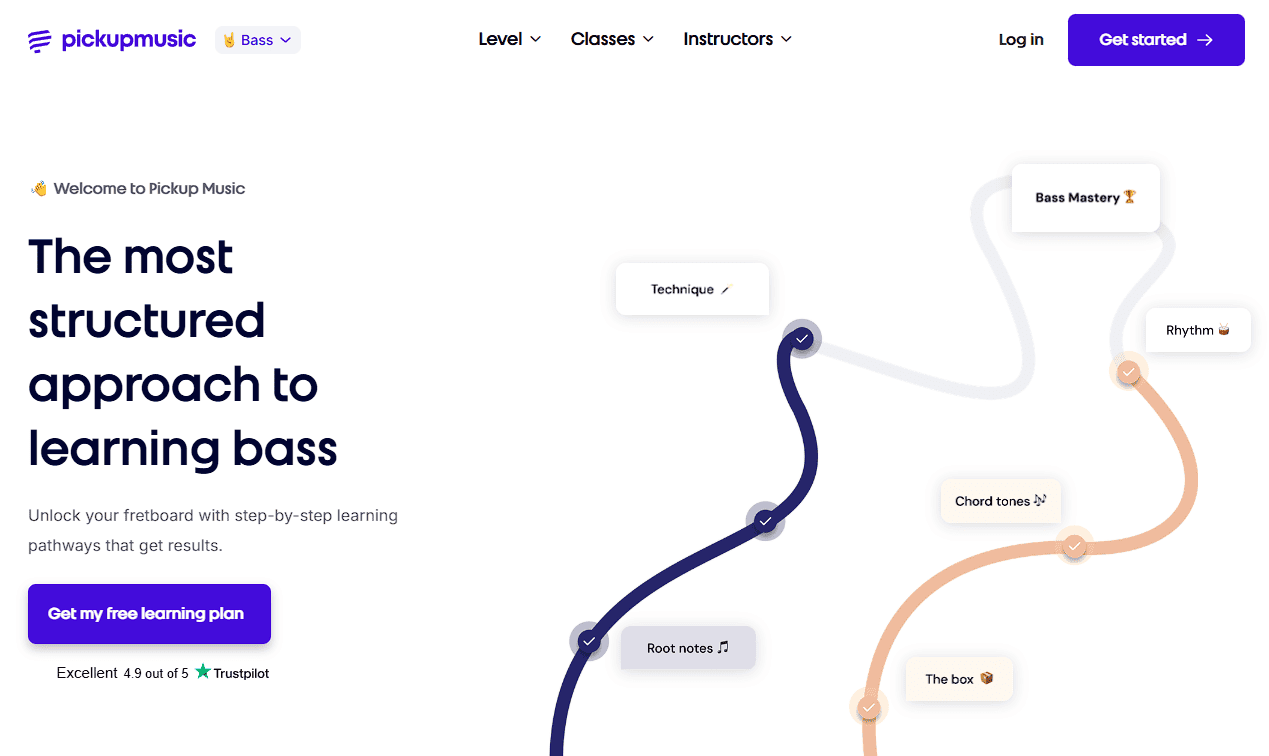
That’s where Pickup Music shines. They don’t give you a syllabus for the next two years. They offer you longer term Pathways that can take three or more months to complete, Challenges which are a week long and focus on topics like walking bass or ghost notes, five minute mini-lessons, and general jam tracks where you can play along with a real band. This project-based approach is necessary for intermediate players because it forces you to take your fundamentals and immediately apply them to a real musical context. For me, having these options keeps me motivated.
Focus on Modernity and Groove
Let’s be honest, I’m not playing in a 70s funk band (yet). I want to play stuff that sounds good now and that I can jam on with my friends. The content at Pickup Music is highly relevant to contemporary music and rhythm section development.
The lessons feel like they were designed for the player who wants to be ready for a gig or a jam session tomorrow. It’s not just theory; it’s about developing your groove. I’m talking about the kind of subtle pocket playing that makes a band sound professional. If you want to move beyond just playing root notes to actually supporting a song, this is where you need to be.
Inside the Locker: What’s Actually Worth Your Money?
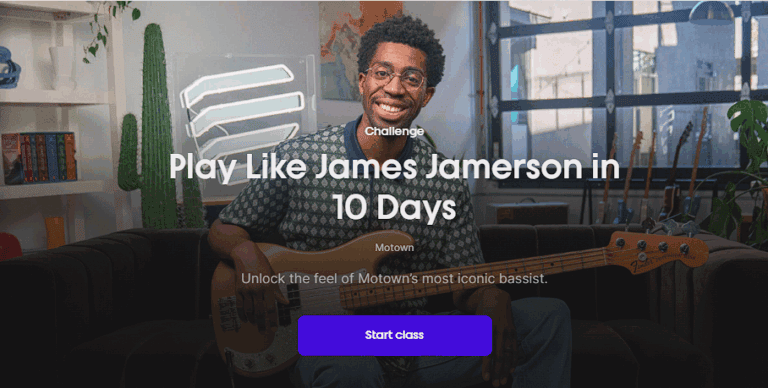
Pickup Music divides its instruction into longer Pathways (full curriculum tracks like the Late Beginner or Intermediate tracks) and specialized, one-off Courses, such as Mastering the Box or playing like James Jamerson.
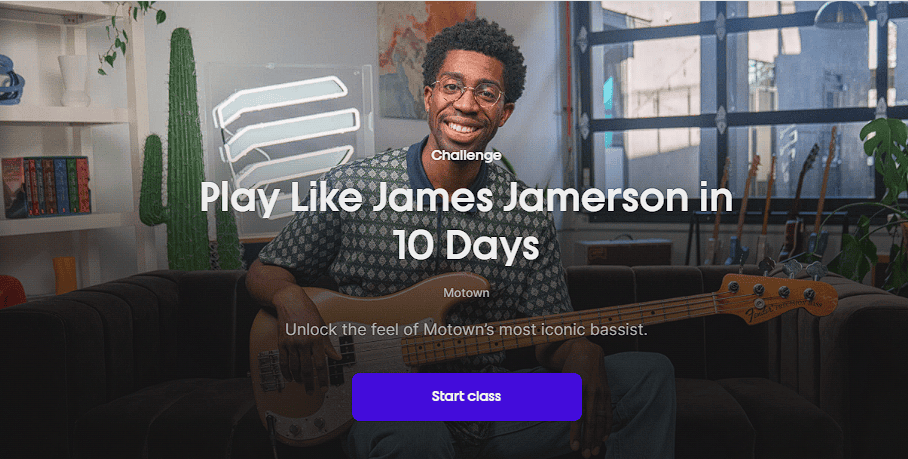
I love the Courses. These are focused, single-topic deep dives into things like slap bass fundamentals, walking bass, or blues bass lines—similar to the approach of my other favorites. They cut the fluff and deliver actionable exercises that you can immediately start practicing. This is where I go when I need to solve a specific problem in my playing, like finally understanding the ghost notes in modern R&B.
Also, I should note that while I’m currently recommending Pickup Music after Beginner to Badass, Pickup Music has a program for the absolute beginner as well. As much as I’m a fan of BassBuzz, you might find you click with Corbin over at Pickup Music better. Since both programs offer a money back guarantee, it might be worth checking out both BassBuzz and Pickup Music to see which platform is best for you.
The Video Critique: The Game Changer
This feature alone is what turned me from a satisfied user into a daily devotee. The Video Critique feature is the most unique and valuable asset on Pickup Music.
Here’s how it works: After you finish a “grade” in a pathway, you complete a final quiz and are encouraged to record a video of yourself playing one of the short songs they provide that build on the exercises of that grade. You upload it, and one of their professional coaches watches it and records a personalized video response for you. We’re talking about specific feedback on your timing, your tone, your technique—stuff you simply cannot get from any static video course.
And…if you’re anything like me you might be resistant to uploading a video of your playing to a stranger. Pickup Music thought of that which is why they incentivize it. Everyone who completes a grade and uploads a video is entered into a monthly drawing for a free bass or guitar. At first, that was my primary motivation, but now that I’ve received my feedback multiple times, I’d do it without the free bass. (Though I’ll take that as well.)
This personalized accountability is what takes you from Above Average to genuinely good. It’s like having a private lesson without the private lesson price tag.
State of the Platform: Is it Just a Guitar Site?
Full disclosure: Pickup Music started as a guitar-focused site, and yes, there is more guitar content than bass at the moment. However, the bass program is developing quickly. New courses are coming online all the time, and the quality is exceptional. You can tell they are committed to building out a world-class bass curriculum, and frankly, I prefer being on a site with fresh, relevant content over one that just recycles the same decades-old theory lessons. The growth trajectory is strong.
There’s a small, but growing community if you’re looking for opportunities to share stories, upload your videos, and simply chat with online strangers about all things bass (or guitar.)
Final Thoughts
The Good
- Highly relevant, real music inspired exercises and content designed for today’s player.
- Personalized Video Critiques offer the absolute best path to fixing technique and timing issues.
- The modular, project-based courses are perfect for the intermediate player’s development.
The Not-Quite-Perfect
- The bass content library is still considerably smaller than giant competitors like SBL or Talking Bass, but growing.
- It offers less theoretical depth than a highly specialized site like TalkingBass (but frankly, most of us don’t need that much theory yet.)
- The monthly subscription adds up, but the value of the critiques makes it worthwhile.
Final Verdict: Is Pickup Music Worth the Subscription?
The bottom line is that Pickup Music is the best platform available for the intermediate player who has completed a beginner course and is looking for focused, modern growth and personalized accountability. It answers the “what now?” question with a definitive and grooving curriculum.
If you are serious about moving past the intermediate slump and want someone to call you out on your sloppy technique (in a nice way!), this is your program.
If you want to see exactly how I integrate these pathways into my daily schedule, check out my 1-2 Punch Bass Practice Routine where I bridge these lessons with real-world jamming.